Commissioned by the Corner Shop: The Quiet Boom in Postcode-Sized Briefs
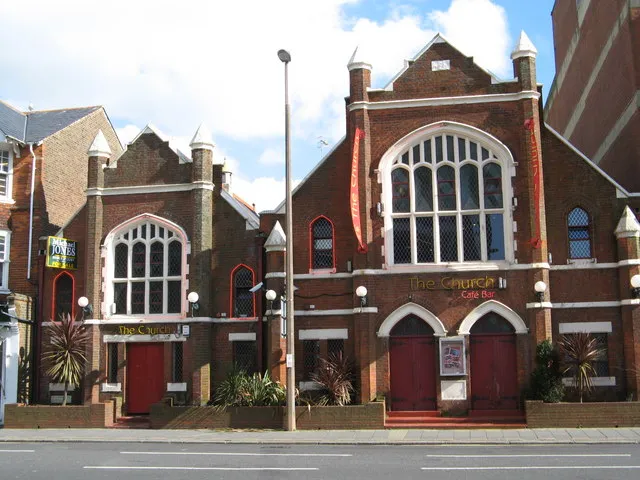
Photo: Josie Campbell , CC BY-SA 2.0, via Wikimedia Commons
There is a particular kind of email that lands in a maker’s inbox at about 9pm on a Tuesday. It is not from a gallery, a brand or a design agency. It is from the person two doors down, and it usually begins: “Sorry to bother you, I know you do this sort of thing…”
The ask is rarely glamorous. A new sign for the corner shop. A bench for the pocket park behind the bus stop. A mural on the side of the community centre that has been peeling since the last jubilee. A repair to the church hall noticeboard. Small, specific, and rooted in a postcode rather than a portfolio.
This is the hyperlocal commission, and it is quietly becoming one of the most useful things happening to UK makers right now. Not because it pays brilliantly — it often doesn’t — but because it gives people a first real brief, a first real client, and a first real audience: the people who walk past the work every single day.
The brief that arrives through the letterbox
Most makers do not advertise for this work. It finds them. A neighbour has seen a window display, a stall at a school fair, a post on the local Facebook group. They approach with a problem rather than a specification. “The shop looks tired.” “The bench is rotten.” “We need something that says we’re still here.”
For a maker who has spent months making speculative work for open calls and Instagram, this is a different kind of challenge. The constraints are real: a budget that is usually three figures rather than four, a timeline tied to a shop reopening or a winter fair, and a client who lives close enough to pop round and check on progress.
The result is not charity work, but it is not full commercial rates either. It sits in a middle ground that UK makers are learning to navigate carefully. The best of these briefs become genuine portfolio pieces — a bench that gets photographed, a sign that gets tagged in local news, a mural that becomes a landmark for a school run. The worst become a cautionary tale about doing favours for people you have to see at the bin store.
What counts as a commission when the client is your neighbour
Pricing is the first hurdle. The instinct is to offer a mates’ rate, and sometimes that is the right call. But makers who have done a few of these briefs tend to say the same thing: quote properly, even if you then choose to discount. A one-page agreement — not a full contract, just a clear note — helps. It should cover the basics: what is being made, what it costs, how many rounds of changes are included, who installs it, and who owns the design afterwards.
That last point matters more than people expect. A corner shop that commissions a sign may later want to put the same lettering on bags, receipts or a delivery van. A community centre may want to use the mural artwork on fundraising materials. A neighbour may want to reproduce the bench design in their garden. None of these are unreasonable, but they should be agreed upfront rather than discovered later.
Other practicalities that catch people out: public liability insurance for anything installed in a public-facing space; landlord permission if the wall is not owned by the client; conservation area or listed building consent for signage in older high streets; and a clear line on maintenance. Who touches up the paint after a winter of rain? Who replaces the slat if it gets kicked in? The street is a tough environment for any object, and the maker who agrees to a repair in October may be asked about it in March.
The street as client and critic
When the work goes up, something shifts. The commission stops being a private transaction and becomes a public object. People who were not part of the brief suddenly have opinions. The local Facebook group weighs in. Someone says the colour is wrong. Someone else says their cousin could have done it cheaper. A passer-by asks why the bench faces the road instead of the sun.
This is the part that surprises makers most. The street is not a single client; it is a committee of people who all feel a sense of ownership because they can see the thing from their front window. For some makers, that is energising. For others, it is exhausting. The ones who cope best tend to treat feedback as information rather than instruction. They listen, they explain the constraints, and they accept that not every comment needs a response.
Scope creep is the other hazard. A successful small commission often leads to: “Could you do the next door too?” “Could you just add a bit on the side?” “Could you fix the gate while you’re here?” Having a clear written scope — even if it is just a text message that says “this is what I’m doing for this price” — makes it easier to say yes to the next thing without resenting the last one.
A portfolio with a postcode
For all the friction, the hyperlocal brief has a real advantage over the open call: it is seen. A piece in a group show may be viewed by a few hundred people over a fortnight. A sign on a corner shop is viewed by the same people every day for years. That kind of visibility builds trust, and trust builds referrals. Community centres talk to each other. Parish councils notice. A maker who does a good job on a bench in one village may find themselves asked to quote for a small public realm project two towns over.
There is also something quietly satisfying about making work that has a job to do. A mural that brightens a school run. A repair that keeps a noticeboard usable. A sign that helps a shop look like it is worth walking into. These are not decorative extras; they are the small infrastructure of a high street that feels cared for.
Keeping it tidy
If you are approached for a postcode-sized brief, the makers who have been through it tend to offer the same advice. Put it in writing, even if it is brief. Take a deposit. Cap the revisions. Specify materials. Agree who installs and who maintains. Check permissions before you buy the paint. And decide early whether you are doing this as a favour, a portfolio piece or a paid job — because it is hard to be all three at once.
The street makes a demanding client. It is also an honest one. If the sign falls down, you will hear about it. But if it works, you will hear that too, every morning, from the person who walks past it on the way to the bus stop.