Fold-Out Studio Trails: The Zine Cartographers Opening Up UK Workshops

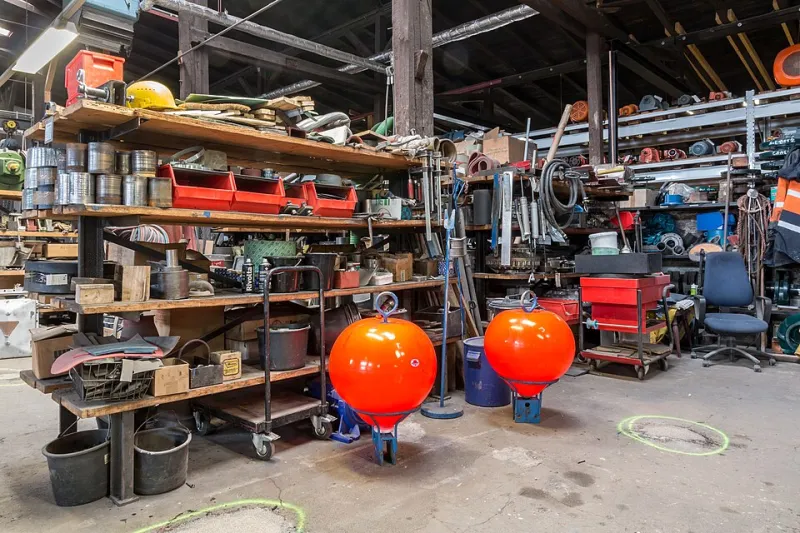
Photo: folded zine map on table with workshop tools, via img.ltwebstatic.com
On a rainy Saturday in Norwich, a small photocopied map is doing more work than any council leaflet on the same rack. It shows a church hall with a print workshop in the crypt, a shared ceramics studio behind a tyre shop, and a group of furniture makers in an old school building on the edge of town. There are no adverts, no star ratings and no opening hours that leave you standing outside a locked door. Just names, numbers and a hand-drawn route between them.
Maps like this are appearing across the UK, produced by independent publishers, maker collectives and occasionally one stubborn person with a risograph and a good list of contacts. They are pocket-sized, cheap or free, and deliberately hyperlocal. They are also, increasingly, how people find the studios that do not appear in official cultural listings.
A map that fits in a coat pocket
'We started because people kept asking where the actual makers were,' says one of the people behind a Bristol zine that maps shared workshops and open-door studios across the city. 'The official guide was great for museums and galleries. It was less good for a laser cutter in a railway arch.'
The zine format suits the job. It is cheap to print, easy to update and small enough to carry. It can be left in cafés, libraries and tool shops. It does not need a web developer or a marketing budget. And because it is not trying to be comprehensive, it can include the awkward spaces: the upstairs room, the workshop behind the shop, the studio that only opens when the tenant is in.
Who draws the lines
Most of these maps are made by people who are already part of a local making scene. A potter knows a printer. A printer knows a frame maker. A frame maker knows someone with a spare room and a kiln. The map is often a formal version of a conversation that has been happening for years.
In Leeds, a collective has been producing a folded guide to studio buildings and shared workspaces since 2024. In Glasgow, a photographer and a bookbinder put together a map of open-access workshops after realising they were both sending people to the same three places. In Sheffield, a zine called 'Sparks and Spaces' grew out of a repair café mailing list.
The people behind them are not cartographers in the traditional sense. They are connectors. They spend time visiting spaces, checking details, asking permission and, crucially, deciding what counts as a maker studio. A shared kitchen used for food production? A garage with a lift? A community hall with a sewing machine bank? The answers vary by town, and that is part of the point.
What gets left off
Every map has an edge. Some spaces are left out because they are not open to the public, or because the people running them do not want footfall. Others are missing because nobody thought to tell the mapmaker they existed. A few are left off deliberately: studios that are already at capacity, or spaces where the owner is uncomfortable with being listed.
'We try to be clear that it is a snapshot, not an index,' says one publisher. 'If a place is not on the map, it does not mean it is not there. It means we did not know, or we could not check it in time.'
The inclusion question also raises familiar tensions. Maps can drive attention to hidden spaces, which is good for makers who want visitors and sales. It can also bring pressure to places that are quietly getting by. The best zines tend to ask first, print a contact route rather than a full address where needed, and update regularly.
From zine to open door
This matters most during the winter open-studio season, when makers across the UK throw open their doors for a few weekends in late November and December. The 2026 season is already taking shape, and several zine publishers are timing new editions to coincide with it.
A good map can turn a scattered set of open studios into a walkable afternoon. It can tell you which bus to get, where to find a loo, and which workshop has a lift. It can also make the difference between a visitor who feels welcome and one who feels like they have wandered into someone's private workspace.
For makers, joining a local map is usually straightforward. Find the publisher, send a short description of your space, say whether you are open to visitors and what accessibility is like. Be honest about capacity. If you are not open, ask to be listed as contact-only. If you are open, check the details before the season starts.
Start your own before the season
Starting a map is not complicated, but it does take legwork. Begin with a small area and a specific question: which maker spaces in this town are open to the public at least once a month? Ask libraries, tool shops, art supply stores and existing maker groups. Keep a spreadsheet. Visit the spaces you can. Print a simple folded A5 zine. Leave it in places where people already go.
The zine does not need to be beautiful. It needs to be accurate. It needs a date on it. It needs a way for people to send corrections. And it needs to be made with the consent of the spaces it lists.
In a moment when high streets are being reimagined and empty shops are becoming studios, these folded maps are doing something quietly useful. They are not waiting for an official strategy. They are drawing the lines themselves, one photocopy at a time.