The Lending Bench: Inside the UK's Equipment Libraries Putting Kilns, Presses and Drills on Loan
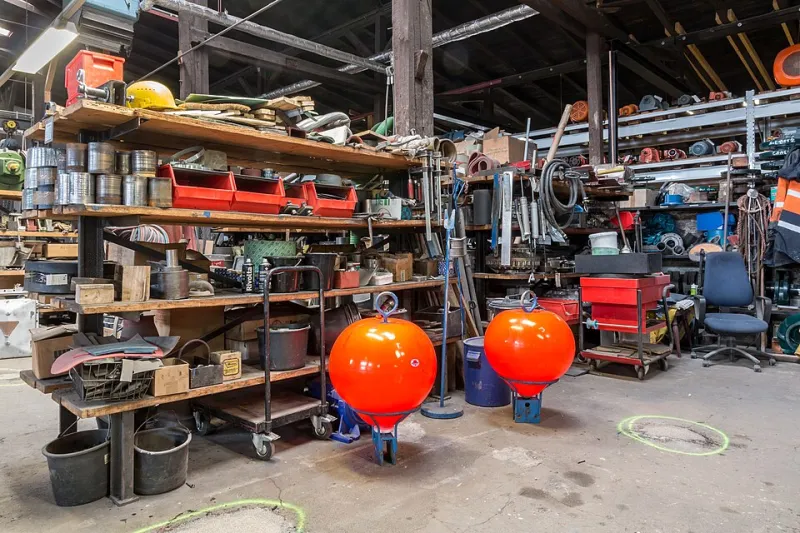
Photo: Dietmar Rabich, CC BY-SA 4.0, via Wikimedia Commons
A kiln is a wonderful thing until you have to buy one, insure it, ventilate it and find a room that can take the weight. A screen-printing press is brilliant until you realise it needs space, water and a drying area. Even a decent overlocker can sit unused for months between projects. For many UK makers, the problem is not skill or ambition. It is the gap between wanting to make something and owning the kit to make it.
That gap is being filled by tool libraries and equipment-sharing studios. Some are run by charities, some by community groups, some by local authorities or social enterprises. They lend hand tools, power tools, sewing machines, projectors, camping kit and cleaning equipment. A smaller but growing number offer access to specialist maker equipment: kilns, printing presses, laser cutters, welding bays and textile machinery. The principle is simple. You borrow what you need, use it properly, and return it. Someone else gets a turn.
What a tool library actually is
A tool library works like a book library, but with objects. You join, usually for a small annual or monthly fee, and reserve items online or in person. You collect them, use them, and bring them back by an agreed date. Staff or volunteers check them in, test them and put them back on the shelf. Many schemes also run inductions, repair sessions and advice drop-ins, so borrowers are not simply handed a dangerous object and wished good luck.
Equipment-sharing studios work slightly differently. Instead of lending a kiln to take home, they provide access to a shared workspace with the kit already installed. You book a slot, pay a session fee or join as a member, and use the equipment on site. That model suits anything that is too heavy, too hot, too messy or too expensive to move: kilns, printing presses, CNC routers, welding equipment and large format cutters.
Who it's for, and who it isn't
These schemes are not just for people who cannot afford to buy. They are for people who do not want to own, store or maintain equipment they use occasionally. A knitter who needs a sewing machine for one project a year. A small furniture maker who needs a biscuit joiner for a single commission. A community group printing banners for a street party. A designer testing a screen-printing idea before committing to a studio. A repair volunteer who needs a specific tool for a one-off job.
They are less suited to people who need guaranteed daily access to the same machine, or who need to leave a project set up overnight. If your work depends on a kiln firing every week, a shared studio may still work, but you will need to plan around bookings. If you need a tool for a long, messy, uninterrupted project, borrowing may become a false economy. The honest answer is that these schemes suit intermittent use, experimentation and people who are willing to plan ahead.
Three schemes worth knowing
The Edinburgh Tool Library is one of the best-known examples in the UK, with a broad catalogue of hand and power tools and a strong volunteer culture. It has helped popularise the idea that a library card should not just get you books.
Library of Things, which began in London and has expanded through partnerships, focuses on household and DIY items rather than specialist maker kit. It is a useful model for anyone thinking about low-cost lending: a clear catalogue, a simple booking system and a network of pick-up points.
Borrow Don't Buy in Plymouth takes a similar approach with a community lending library of things, from tools to catering equipment. Smaller schemes exist in Stroud, Glasgow, Bristol and elsewhere, often hosted by community centres, repair cafes or housing associations. The pattern is consistent: a local champion, a venue, a catalogue and a volunteer rota.
What to borrow first
If you are new to a tool library, start with the things that are expensive to buy and awkward to store. A good quality drill. A sewing machine or overlocker. A wallpaper steamer. A carpet cleaner. A projector for a community event. A decent jigsaw. These are the items that justify the membership because you will use them rarely but need them properly when you do.
For specialist maker equipment, start with an induction. A kiln is not a toaster. A screen-printing press needs a clean workflow and a drying space. A laser cutter needs training and supervision. Ask what the scheme requires before you book, and factor in the induction time. The best schemes will tell you honestly whether your project is a good fit.
How to set one up in 2026
The first step is not a grant application. It is a survey. Ask local makers, repair groups, allotment societies, schools and community organisations what they would actually borrow. You will probably find a long list of items that people need once or twice a year and cannot justify buying. That list is your starting catalogue.
Next, find a host. A community centre, church hall, library, housing association, high street unit or makerspace can all work, provided it has secure storage, decent access and insurance that covers lending. Check the insurance early. Lending tools is not the same as storing them, and some policies will need adjusting.
Start with low-risk, high-demand items. Hand tools, sewing machines, steamers, projectors and small power tools are easier to manage than kilns and welding kit. Build a booking system that is simple enough to use on a phone. Keep a maintenance log. Train a small team of volunteers to check items in and out. Set clear late fees, damage policies and a deposit scheme if you need one.
Funding can come from a mix of membership fees, local council grants, National Lottery community funding, crowdfunding and donations. Do not underestimate the value of in-kind support: shelving, a secure container, a website, a volunteer accountant. The strongest schemes are usually the ones with a boring spreadsheet and a reliable rota, not the ones with the most exciting launch party.
The maintenance question
Every lending scheme lives or dies on maintenance. A returned drill with a blunt bit is a problem. A returned sewing machine with a missing bobbin case is a bigger one. Build in time for checking, cleaning and repairing. Partner with a local repair cafe or a friendly technician. Keep a small budget for replacement parts. And be honest with borrowers about what they need to do before returning an item.
The wider benefit is not just access. It is a shift in how people think about ownership. A shared kiln, a borrowed press or a library drill is a small piece of collective infrastructure. It lets more people try things, waste less and keep useful equipment in use for longer. In 2026, that is placemaking as much as it is tool-sharing: a high street unit, a community hall or a back room that becomes a little more useful to the people around it.