Shuttered by Day, Lit by Night: The Makers Turning Empty Shopfronts into Winter Galleries
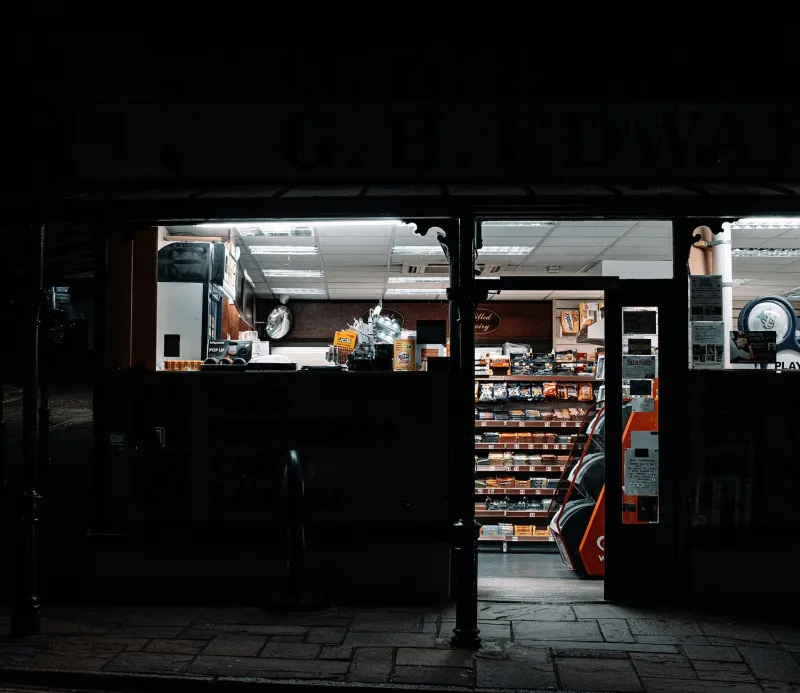
Walk down most UK high streets after six in the evening in November and you meet the same thing: shutters, a couple of takeaway queues, and a row of windows with nothing behind them but a strip light somebody forgot to switch off. It is a peculiar kind of absence, because the space is still there — the glass, the doorway, the painted sign of a business that closed three tenants ago.
Increasingly, makers are looking at that gap and seeing something else entirely: a gallery with a lock on the door and a rent that can, with patience, be talked down.
The window nobody is using
In Stockport's Underbanks, in Hull's Old Town, in the side streets running off Newport's Commercial Street, illustrator collectives, ceramicists and printmakers have spent the past few winters converting vacant shopfronts into after-dark exhibition spaces. Not pop-ups in the launch-night-and-canapés sense. More like slow, community-owned takeovers: a display that changes every month, a late-night maker market once a fortnight, a warm back room with a kettle and someone showing a stranger how to burnish a lino print.
The logic is simple enough. A landlord sitting on an empty unit is paying rates, insurance and a certain amount of anxiety. A maker with work to show is paying for a website nobody visits and posting into the void. Put the two in the same room and you get a lit window, a bit of footfall, and a story the local paper will actually print.
The paperwork nobody warns you about
The first conversation is with the landlord, and it goes better if you sound like a risk you can manage rather than a favour you are asking for. Most of these arrangements sit under a meanwhile or short-term licence rather than a lease — typically rolling monthly, sometimes with a break clause and an obligation to hand the unit back in the state you found it.
Three things derail more projects than money ever does: insurance, electrics and keys. Public liability cover is non-negotiable and usually runs to £5–10 million; a collective policy for a small group is often cheaper than six individuals buying their own. The wiring in a shop that has been dark for a year is a genuine unknown, so budget for a qualified tester before you hang anything. And settle early who holds the keys, who knows the alarm code, and who is on the end of the phone at nine on a Saturday night.
Splitting the cost without splitting the group
The groups doing this well tend to run on a flat monthly contribution — somewhere between £15 and £40 per maker covers a modest licence fee, lighting, insurance and a shared kitty for tea and gaffer tape. The number matters less than the transparency: one shared spreadsheet, a named treasurer, receipts photographed and filed.
Consensus decision-making sounds lovely and stalls fast. A better pattern is a steering group of three with a clear remit, a monthly call, and one rule everybody signs: nobody changes the window without telling the others.
Staging a window that works after dark
Daylight is a rumour in December. The display has to be designed for the dark first and the daylight second — warm lighting low down, nothing that depends on natural light, and a clear focal point at eye height for someone walking past at speed.
Practicalities outrank aesthetics. Fix everything properly; nothing should be reachable or toppleable from the pavement. Keep cables clipped and off the floor, stick to LED fittings, and never run an extension lead through a doorway people use. Check the ceiling for water ingress before installing, and photograph the whole unit on day one so there is no argument at exit. Condensation is the quiet killer of paper and unfired clay in cold glass boxes; a couple of silica packs or a small dehumidifier will save a portfolio.
Security is mostly about being boringly predictable: a closing rota, a last-person-out checklist, and no stock left overnight that you would cry about losing.
Counting what actually happened
Footfall is the word every council officer and BID manager will use, so have an answer ready. A cheap manual clicker worked by whoever is invigilating, a QR code to a mailing list and a simple tally of sales will do more for your next application than a paragraph of vibes. Ask the local BID whether they will share camera or sensor data for the street — plenty will, and it makes your case considerably stronger.
Show the numbers to the landlord, too. A unit with demonstrable activity is easier to let, and landlords talk to each other.
A winter 2026 checklist for pitching your own
- Start with a named contact for the unit, not a generic estate agent inbox. Council regeneration teams and BIDs usually know which landlords are approachable.
- Ask for a meanwhile licence with a 30-day break, and get the insurance requirement confirmed in writing.
- Cost it properly: licence, public liability, electrical test, lighting, fixings, cleaning, contingency.
- Write a one-page risk assessment before anybody says the words risk assessment.
- Agree an invigilation and closing rota, and put it somewhere everyone can see.
- Photograph the unit at handover and again at exit.
- Plan the first three window changes before you open the first one.
- Tell the local press, the BID and your MP's office — roughly in that order.
The high street does not need saving by a single grand gesture. It needs a few hundred lit windows, each with someone behind them who knows how to make a thing and is willing to explain it to whoever stops.