Pass the Salt, Pass the Skills: Inside the UK's Maker Supper Club Boom

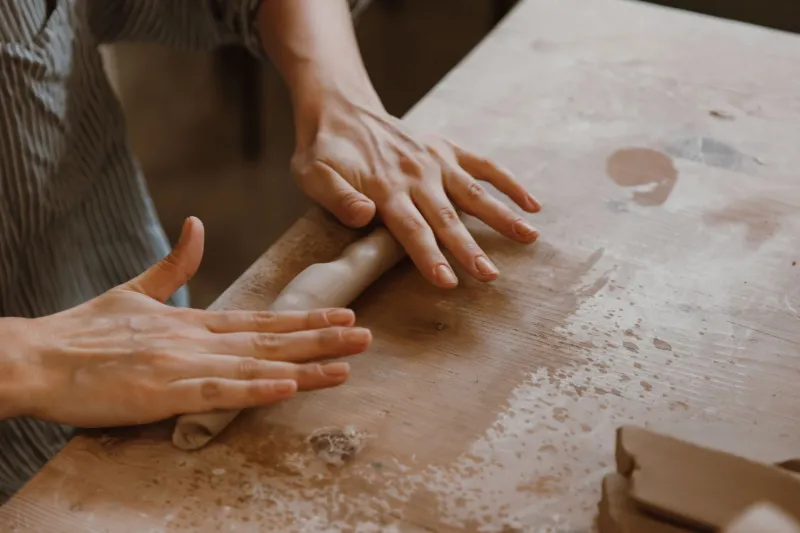
Photo by Photo by Meg von Haartman on Unsplash on Unsplash
On the third Thursday of the month, a dozen people carry hot dishes up a narrow staircase above a former bakery in Easton, Bristol. By half nine the bowls are stacked by the sink and the tables shoved against the wall, and a ceramicist called Priya is teaching six adults to pull a cylinder on a borrowed wheel while a photographer takes her turn at the flipchart, explaining why nobody's glaze photos look like the ones on Instagram.
Nobody has paid for a course. Everybody has paid about £20 — for the food, a shared materials kitty and a fiver in the tin for the room. The rest is traded.
This is the maker supper club: part social dining, part informal professional development, and one of the more quietly useful things to happen to the UK's craft scene in the past couple of years. The format varies wildly, but the bones are the same everywhere. You eat together. You teach each other something. You go home with a full stomach and a new contact.
The mechanics of a swap
The Bristol club runs to a rhythm that most of the others have copied. Arrive, eat, clear up. Then three short demos of twenty minutes each, given by whoever put their hand up at the last meeting. Then one longer session — the 'big swap' — where someone with a proper specialism takes the room for forty minutes. A swap board (a bit of A1 and a fistful of marker pens) sits by the door all evening, and anyone who wants to trade one-to-one writes their name and their skill on it.
Two house rules do most of the heavy lifting. First, everyone teaches something, even if it's unglamorous — bookkeeping, pricing, how to photograph a flat-lay without a lightbox. Second, nobody teaches the same thing twice in a quarter, which stops the thing calcifying into a lecture series with dinner attached.
Bristol: glazing for grain
The Proofing Room started in early 2024 when a baker and a textile designer got tired of separately complaining that neither of them could afford the short courses they wanted. It now runs with fourteen regulars and a rotating guest list of about six: a printmaker, a furniture restorer, an upholsterer, a sound designer who mostly does theatre, a coder who builds websites for galleries, and Priya, who has a kiln in a garage in Bedminster.
What gets traded is not always obvious. Sourdough lessons have bought screen-printing time. A cyanotype workshop was repaid in an afternoon of spreadsheet-building for a self-employed jeweller who had been invoicing from memory. The club has also, without ever meaning to, become the place where members find paid work — two collaborations and at least one part-time job have come out of the Thursday nights.
Manchester: hand skills meet hardware
The Ancoats Kitchen is the noisiest of the three. It runs out of a community room with a proper commercial hob, and its membership skews towards people who make things for a living rather than as a hobby: a pattern cutter, a leatherworker, a laser-cutting technician, a freelance illustrator. There is a waiting list.
The Manchester crowd is the most explicit about the professional-development angle. Sessions get logged on a shared document, and members have used the swaps to fill gaps they could not justify paying to close — a pattern cutter learning enough CAD to talk to a manufacturer without being bluffed, a leatherworker getting a straight answer about business rates.
It is not a substitute for a proper course, and nobody pretends otherwise. What it does is cheaper and stranger and more sociable, and it puts you in a room with people who have already made the mistake you are about to make.
Glasgow: the quarterly big swap
Govan's version grew out of a shared studio building and does things at a different scale. Rather than monthly dinners, it runs four larger gatherings a year in a hall with a proper kitchen, thirty-odd people, a printed timetable and a creche in the back room. The smaller monthly meals happen in people's flats and are deliberately informal.
The Glasgow organisers are the most thoughtful about access. Tickets are pay-what-you-can with a suggested £20, materials are supplied, and the venue is step-free with a lift. Their argument is straightforward: a supper club that only works for people with a big kitchen, a car and childcare is not a supper club, it's a dinner party.
Why it works
Short courses at a good craft college can run to several hundred pounds, and the good ones fill up months ahead. A supper club costs the price of a meal, gives you a peer group, and does not require you to commit six consecutive Saturdays. For freelancers in particular, it doubles as the thing that is hardest to find when you work alone: other people who understand what your week actually looks like.
The trade-off is depth. Twenty minutes of glazing instruction will not make you a production potter. What it will do is tell you whether the six-week course is worth saving for, and who to ask when you get stuck.
Starting one in your city
- Find a kitchen, not a venue. A community hall, a studio with a hob, a pub back room that will let you bring food. The room matters less than the fact that people can eat in it.
- Price the plate, not the lesson. £15–£20 covers food plus a materials kitty. Keep the money in a tin, keep a note of what it was spent on, and keep it boring.
- Cap it at twelve to sixteen. Two tables maximum. Beyond that, the swaps get shouty and the quiet people stop contributing.
- Use a swap board, not a syllabus. Let the programme emerge from who turns up.
- Do the dull paperwork once. Collect allergens and dietary needs in advance, take out public liability cover if you are hiring a space, check the venue's licence if you plan to sell alcohol, and register as a food business with your council if you are providing food regularly. It is a couple of hours of admin and it means you can relax.
- Feed people first. Every successful club we spoke to serves before it teaches.
- Let it drift. The best ones change shape every few months.
Joining rather than starting
If you would rather turn up than organise, look at the noticeboards in your local maker space, the group chat of any studio share, and the community pages of your nearest independent café — that is where most of these are advertised, usually with about a week's notice. Bring one thing you can teach in twenty minutes and one thing you have been meaning to learn for a year. That is the whole entrance fee, on top of the £20.
Back in Easton, the last of the bowls has been washed and the wheel is being folded away. Priya is writing her number on the swap board next to a note that says 'want to learn: how to photograph a glaze that is actually shiny'. Someone has already circled it.