Swap Meets: The UK Makers Trading Know-How Instead of Cash
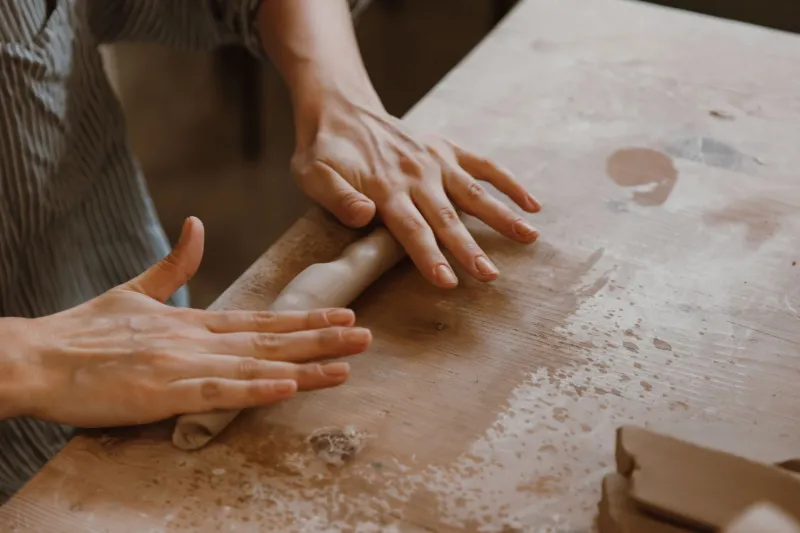
On a damp Sunday afternoon in Kirkstall, Leeds, the back room of a pub smells of clay, coffee and hot metal. There is no till, no card reader and no entry fee. A ceramicist is showing a welder how to pull a handle; he is explaining how to tack a steel frame without warping it. By four o'clock they have agreed a four-session swap. Nobody has opened a wallet.
Welcome to the informal skill-swap circuit — the UK maker scene's answer to rising costs and shrinking studio time. In 2026, with rents up and freelance work patchy, makers are reorganising around a simple idea: if you have a skill, you have currency. The format is not a new app or a paid platform. It is a room, a sign-up sheet and a group of people who would rather trade know-how than invoices.
It is also exactly the kind of make-things-happen energy Creative Sun exists to document. Not waiting for a funding pot or a landlord to fix things, but putting out chairs and seeing who turns up.
The Leeds pub table: glazing for welding
Mira, a ceramicist with a shared studio in Armley, had been stuck on a steel armature for months. Dev, a metalworker who rents a bench in a shared workshop, wanted to understand glazes well enough to finish a small run of enamelled panels. They met through a noticeboard in a coffee shop and now run a monthly swap in the pub's back room.
The format is deliberately loose. People arrive at two, write what they can offer and what they need on a chalkboard, and pair up. There is a short demo — this month it is pulling handles and tack welding — and then the room splits into twos and threes. Some swaps are one-off; others become a regular trade. The only rule is that no cash changes hands. Consumables are bring-your-own or use the host's scrap box.
'It is not about getting a free lesson,' Mira says. 'It is about meeting someone who knows the thing you are stuck on. You can read a hundred forum posts and still not understand why your handle is cracking. Ten minutes with someone who has done it is worth more.'
Partick library: bookkeeping for screen-printing
In Glasgow, the swap is quieter. On the second Sunday of the month, a group takes over a meeting room at Partick Library. The library provides the space free; the group provides the tea and the sign-up sheet. Here the trades are less physical but just as specific: an illustrator swaps screen-printing know-how for bookkeeping, a photographer swaps darkroom time for help with grant applications, a textile designer swaps pattern-cutting for website troubleshooting.
Freya, an illustrator who helps organise the sessions, says the library setting changes the mood. 'A pub is great for chatting, but a library feels neutral. People who would never walk into a studio crawl are happy to come to a library. We get retired accountants, students, people who have a skill from a previous career and want to keep using it.'
The group uses thirty-minute slots and a simple booking sheet. There is no expectation that anyone is a qualified teacher. 'We say: you do not need to be an expert, you need to be one step ahead of the person you are helping,' Freya says. 'And if you are not sure, say so. The swap can just be a conversation.'
Easton hall: the barter board
Bristol's Easton Community Hall hosts a more chaotic version. A long table by the door holds a board covered in cards: 'Offer: basic pattern cutting', 'Want: help with a kiln shelf', 'Offer: bike repair', 'Want: someone to show me how to use a sewing machine'. For the first hour, people mill about, match cards and drink tea. For the second, they get to work.
The hall is step-free, the session is child-friendly, and there is a quiet corner for anyone who needs it. Organisers say that accessibility is not an afterthought — it is part of the swap. If someone cannot stand at a workbench for an hour, the swap can be a demo, a drawing session or a phone call later in the week.
There is also a rule about safety. Risky tools are demonstrated only, not handed over. No one offers gas work, electrical sign-off or medical advice. The point is to share craft knowledge, not to pretend a Sunday swap is a professional qualification.
How to start a swap without money changing hands
You do not need funding to start a swap circle. You need a room, a date and a bit of nerve. Here is a simple way in.
-
Find a room that already believes in something. Pubs at quiet times, libraries, community halls, faith halls and co-working spaces are all worth asking. Offer to promote the session to your networks, or offer a swap in return — a sign, a repair, a bit of design work.
-
Pick a low-friction format. A barter board works for open, busy rooms. Booked slots work for quieter spaces and skills that need concentration. Start with two hours, not a whole day.
-
Write the rules down. No cash. Bring your own materials or use scrap. Respect the room. No unsafe equipment. No one is obliged to disclose anything they do not want to. If a job needs a professional — gas, electrical sign-off, legal or medical advice — signpost it and move on.
-
Keep it small at first. Six people around a table is a success. Ten is a crowd. Twenty is a different event with different risks.
-
Keep a ledger of swaps, not money. A notebook with names, skills, dates and follow-ups is enough. It helps people remember what was agreed and stops the group becoming a vague social club.
-
Share the hosting. Rotate the person who opens the room, makes the tea and watches the clock. Burnout is the enemy of a good swap circle.
-
Do not let it become unpaid labour. Swap circles are not a way to undercut paid work. If a maker needs a professional job done, they should pay for it. Barter works best when it sits beside the paid economy, not on top of it.
Why barter works — and where it does not
A skill swap will not pay the rent. It will not replace a kiln, a press or a darkroom. But it can build the network that helps you pay for them. It can turn a stuck project into a finished one, and a stranger into a collaborator. In a year when studio costs and freelance insecurity are both biting, that is not a small thing.
The makers running these circles are not waiting for a policy fix. They are putting out chairs, making tea and trusting that someone in the room knows the thing they need to learn. That is the Creative Sun spirit in practice: make things happen, then make room for someone else to do the same.