Small Change, Serious Craft: The Micro-Grants Helping UK Makers Take Their Next Step
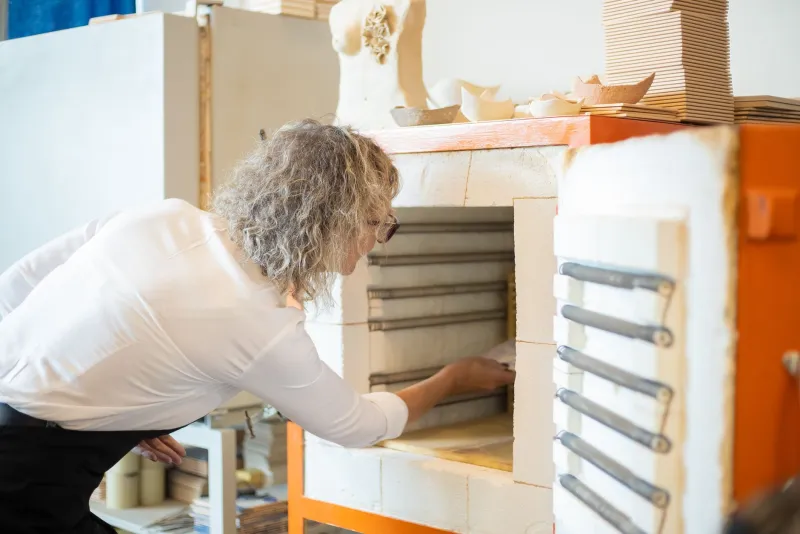
There is a particular kind of stuckness that every maker knows. You have the idea, the skills and the stubbornness. What you do not have is £600 for a secondhand kiln, or £280 for a market stall, public liability insurance and a card reader that actually works on a windy Saturday in Leeds.
That gap is where micro-grants live. Usually between £100 and £2,000, these small funding pots are handed out by councils, community foundations, business improvement districts, maker spaces and crowdfunded match schemes. They are not going to fund a studio move or a full-time salary. But they can buy the thing that turns a side project into a practice — and they are often far less intimidating to apply for than national arts funding.
The £500 question
The UK's micro-grant landscape is deliberately unglamorous. You will not find most of it on a billboard. It sits in council arts newsletters, community foundation PDFs, BID email bulletins and the noticeboard of your local makerspace. Some schemes are undersubscribed simply because nobody knows they exist.
The sums sound modest. The impact is not. A £500 grant can cover the difference between hiring a kiln at £40 a firing and owning one that lets you experiment on a Tuesday night. It can pay for a first trade fair, a batch of packaging, a website that does not look like it was built in 2011, or the materials to test a product line before you remortgage your spare room.
Three makers, three small leg-ups
Maya, Bristol — the kiln that changed the firing schedule. Maya had been making ceramics for three years and firing at a local studio whenever she could book a slot. A £650 creative bursary from her district council paid for a secondhand kiln, a ventilation kit and the electrician's invoice. The application was two sides of A4: a simple budget, six photos of her work and a short statement about what the money would change. 'I rang the arts officer before I applied,' she says. 'That call was worth more than any form-filling guide. She told me what the panel actually wanted to see.'
Danny, Leeds — the stall that paid for itself. Danny makes small-batch wooden homeware and had never done a proper trade fair. A £300 micro-grant from his local makerspace covered a shared stall, insurance and a card reader. He sold enough on the first weekend to cover the grant's value in profit and came away with a waiting list. The form took 40 minutes. 'I nearly didn't apply because it felt too small,' he says. 'But that's the point. It was small enough to say yes to.'
Priya, Glasgow — the test batch. Priya wanted to trial a line of lampshades made from recycled textiles but did not want to sink her savings into a batch that might not sell. A £900 match-funded grant through a community foundation let her make ten pieces, photograph them properly and test them at three markets. She did not need a 20-page business plan. She needed a clear sentence about what she was testing and what she would learn.
Where the money actually sits
Micro-grants are scattered, which is annoying but also means there are more doors than you think. Start with these six places.
- Local authority arts and craft bursaries. Check your council's arts pages, sign up to the arts officer's newsletter and look for 'creative bursaries', 'makers' awards' and 'community grants'.
- Community foundations and CVSs. These often hold small pots for culture, wellbeing or community benefit. The criteria can be broader than you expect.
- Business improvement districts. High street and placemaking funds sometimes cover market stalls, shopfront windows and pop-up events.
- Maker spaces and equipment libraries. Some offer member micro-grants, free firing hours or residency slots that include materials.
- Crowdfunded match schemes. Platforms such as Crowdfunder and Spacehive sometimes run local match funds where a grant tops up what you raise.
- Guilds, societies and charity arms. Trade bodies and craft societies occasionally offer small development awards for members.
How to write an application that lands
Micro-grant panels are usually reading a lot of forms in a short space of time. Clarity beats cleverness. Read the criteria twice, then ring or email the scheme contact with one specific question. Build a budget where every pound is accounted for — 'materials' is vague, '£120 for 20kg of stoneware clay' is not.
Show what changes if you get the money. 'I will be able to fire work monthly instead of quarterly' is stronger than 'I will grow my practice'. If the scheme cares about community, say how you will share the skills: a workshop, an open studio, a demo at a market. Keep it human. One good photo of you at work is worth three stock images of someone else's hands.
And do not ask for too much. A tight £400 budget that does exactly what it says is more persuasive than a £1,800 wishlist with no centre.
The catch: small sums, real admin
Micro-grants are not free money. Most require a bank account, receipts and a short report. Some ask for public liability insurance or safeguarding policies before you start. Timelines can be tight — you might need to spend the money within three months. Keep every receipt in a folder, digital or otherwise, and photograph your purchases as you go.
The bigger risk is grant-chasing. It is easy to spend more time hunting for £250 than making the work that the £250 is meant to support. Set a limit: one afternoon a month, not every evening.
Your 2026 starting point
Open a note on your phone and search 'creative bursary' plus your council name, 'community foundation' plus your region, and 'small grants' plus your nearest BID. Sign up to two newsletters — your local arts officer and your nearest makerspace. Ask other makers what they have applied for; the best leads are usually passed by word of mouth.
Then set a calendar reminder for the first week of each quarter to check deadlines. The pots are small, but they are real. And in a practice where the next £500 can be the difference between waiting and making, that is not small change at all.