Twenty Minutes, One Fix: Inside the UK's Drop-In Maker Surgeries

Photo by Photo by Age Cymru on Unsplash on Unsplash
There is a particular kind of paralysis that sets in when a project stalls. The sleeve doesn't sit right. The weld keeps blowing through. The glaze looks like orange peel and nobody knows why. A full course can feel like overkill when all you need is a nudge from someone who has already made the mistake.
That is the gap being filled by a quiet wave of pop-up maker clinics across the UK. They are not masterclasses. They are not accreditation routes. They are short, free or low-cost drop-in sessions in libraries, community halls and shared workshops, where experienced makers give focused advice on one stubborn problem at a time.
A triage desk for making
The format is deliberately simple. You turn up, put your name down, and get around twenty minutes with a maker. Bring the half-finished thing, the pattern, the sketch, the failed test tile or a phone full of photos. The maker listens, asks a few questions, demonstrates something, and sends you away with a next step. If the problem needs more than twenty minutes, they will say so.
'It is not a replacement for proper training,' says one organiser. 'It is a way of stopping people giving up before they get to the training.'
That distinction matters. The clinics are not trying to replace evening classes or college programmes. They are trying to catch people at the point where a small technical hitch starts to feel like a personal failure.
Leeds: the pattern table
At Leeds Central Library, a monthly clinic has been running since 2023 under the banner of the Pattern Table. It is run by a small group of garment makers and dressmakers who between them have decades of experience in fit, grading and alterations. Sessions run on selected Saturdays through the winter, with the next one scheduled for 14 November 2026.
The table fills up quickly. One person arrives with a vintage coat pattern that has no seam allowances marked. Another has graded a bodice up two sizes and found the armhole has gone strange. A third is trying to rescue a waistcoat that fits at the back but gapes at the front.
'Pattern grading is one of those things that looks like maths but is really about understanding how a body moves,' says one of the volunteers. 'You can read about it for hours. Sometimes you just need someone to point at the paper and say, that bit there is the problem.'
The clinic is free, though there is a donations tin for the library's maker collection. No sewing machine is required. Most people bring paper, a pencil and a garment that almost works.
Sheffield: sparks without the scramble
In Sheffield, a different clinic takes a louder approach. Spark & Steel runs out of a community hall in the east of the city, with a focus on MIG welding and metalwork basics. It is aimed at people who have bought a small welder, inherited a workshop's worth of kit, or booked onto a longer course and want to know what they are walking into.
Safety is non-negotiable. The clinic supplies gloves, masks and a supervised set-up. The twenty minutes are usually spent on machine settings, gas flow, wire speed and the difference between a tack weld and a seam that will hold. There is no qualification at the end, and the organisers are clear that it is not a short-cut to coded welding. What it does offer is a way to ask the questions that feel too basic for a paid course.
'People often arrive embarrassed,' says one of the fabricators involved. 'They think everyone else knows what 'amps' means. Then they watch someone else ask the same thing and you can see the shoulders drop.'
Glasgow: glaze, ask, go
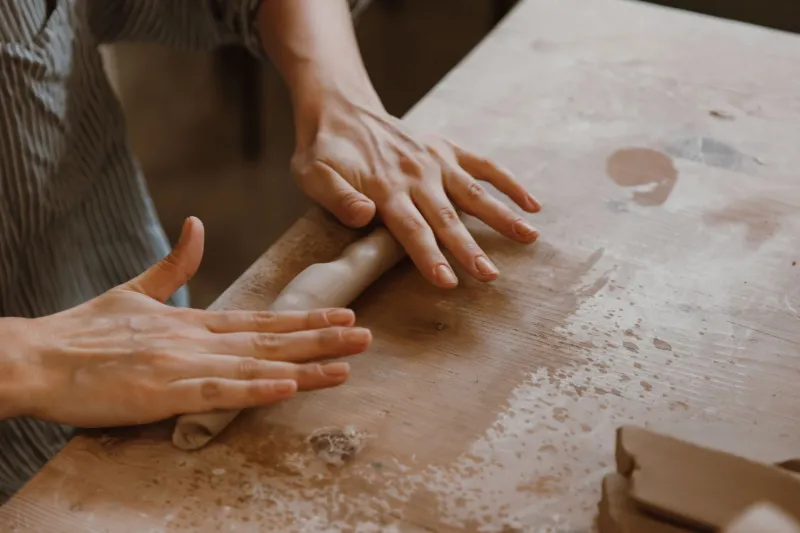
In Glasgow, a ceramics clinic in Maryhill takes a gentler tack. Glaze & Gaze is run by a potter and a technician who between them have spent years troubleshooting other people's kiln disasters. Bring a bisque-fired piece, a test tile or a recipe that has gone wrong. They will look at thickness, application, firing schedules and the endless variables that make glazing feel like weather.
The clinic runs on a drop-in basis on selected Sunday afternoons this winter. There is no need to book, though there is a cap on numbers. The atmosphere is closer to a kitchen table than a classroom. People arrive with boxes of failed pots and leave with a plan, a borrowed book recommendation and, often, a phone number for someone with a shared kiln.
Why twenty minutes works
Short clinics work precisely because they are short. There is no pressure to fill a term, no expectation that everyone will produce a finished object, and no hierarchy beyond who has done the thing before. The format makes it easier for people to ask small questions that do not feel worth a whole course.
It also builds networks. Organisers report that repeat visitors start helping others. Someone who came in with a pattern problem comes back the next month to show a finished garment. A welder who needed help with settings starts advising on a different machine. The clinics are not just information exchanges; they are low-stakes entry points into a local maker community.
For anyone thinking of going, the advice is straightforward. Bring one problem, not five. Bring the actual object if you can, or good photographs and measurements if you cannot. Write down the answer before you leave. And if you are an experienced maker with a couple of hours to spare, consider offering a clinic of your own. The demand is clearly there.
Details of winter clinics are usually posted on library noticeboards, community hall newsletters and local maker group pages. They are worth checking before the December rush.