Sorted, Tagged, Taken: The Quiet Craft of Britain's Scrap Libraries

Photo: volunteers sorting fabric and wood offcuts in a community workshop UK, via givefinity.com
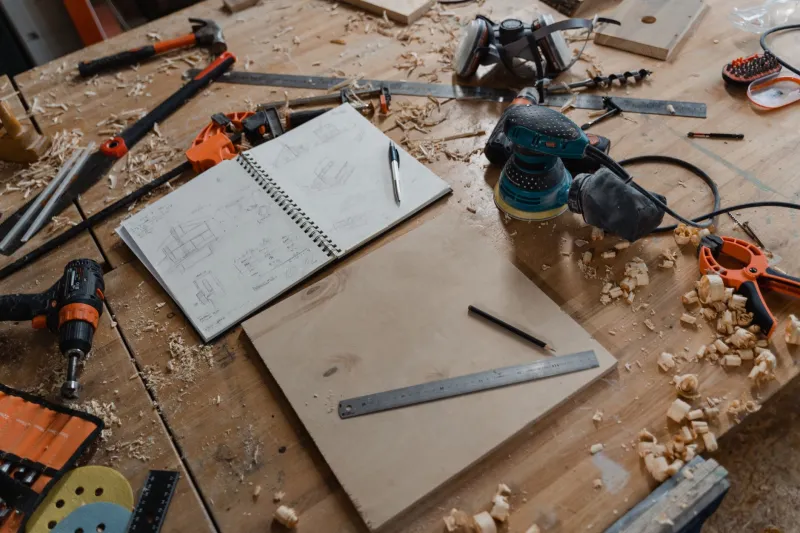
On the first Saturday of the month, the back room of a former cabinet workshop in Bristol smells of sawdust, pencil shavings and strong tea. A trestle table is covered in oak offcuts, brass hinges, half a roll of upholstery webbing and a shoebox of ceramic test tiles. Nobody is making anything yet. They are sorting. Two volunteers measure timber against a chalked gauge on the wall; another writes on a paper tag in careful block capitals: 'Oak, 42cm x 8cm x 2cm, ex-stair job, donor: R. Patel, 12/10'. The tag goes through the hole in the corner and the offcut goes on the rack. Only then is it available to borrow.
This is the unglamorous engine of the UK's scrap libraries: not the pile of free stuff, but the paperwork that makes the pile usable. Member-run archives in studios, community centres and former shops now lend leftover leather, textile swatches, timber, clay and hardware to anyone who can use them. The pitch is simple — keep good material out of the skip, put it in the hands of someone who needs it. The reality is a slow, hands-on craft of its own.
A taxonomy of leftovers
Most scrap archives start with a skip and end up with a system. The Bristol timber archive sorts by species first, then length, then condition. Anything under 20cm goes into a 'small parts' crate for model makers and repair jobs. Anything with a nail in it goes to the bench before it goes on the rack. 'No mystery bin' is a rule repeated at all three places I visit. If a donor cannot say what a material is, it gets tested, labelled 'unknown — craft use only' and kept in a separate tray. Volunteers describe the sniff test, the bend test and the scratch test as part of the job.
The textile archive in a converted chapel in Leeds works differently. It began with a closing upholsterer's sample books and now fills two rooms with swatches, end-of-roll furnishing fabric, leather offcuts and bags of zips. Volunteers sort by fibre and weight, then by colour family. A swatch that is too small for a cushion but big enough for a patch pocket goes into the 'small makes' box. The archive keeps a laminated guide on the wall: wool, cotton, linen, poly-cotton, unknown. Lending is free, but borrowers are asked to take only what they can use in a month. 'We are not a fabric shop,' says one volunteer. 'We are a pause button.'
In Glasgow, a mixed-material cupboard in a community centre takes a broader view: clay, spare parts, picture frames, haberdashery, a box of small aluminium offcuts. It is the smallest of the three and the most improvisational. The catalogue is a ring binder and a spreadsheet, updated when someone remembers. Lending happens on Thursday evenings and Saturday mornings. The cupboard's rule is one shopping bag per visit, weighed at the door. It is not about rationing; it is about making the stock last until the next sort.
The provenance problem
Every scrap archive I visit is wrestling with the same question: how much story to keep. A plain offcut is easy to lend. A tagged offcut with a donor name, a date and a former life is harder to shift, because it arrives with a small burden of meaning. One volunteer shows me a roll of wool bouclé donated by an upholsterer who closed a shop on the high street. The tag says so. Nobody wants to cut into it. It sits on the shelf like a museum object.
That tension runs through the sector. Stories are the point — they are what separates a scrap library from a bin — but they can also slow things down. Some archives now use a two-tier tag: a short material description for the lending sheet and a longer 'notes' field for the story. Borrowers can read the notes if they want, but they do not have to. The tag stays with the material until it is used. When it is finally taken, the donor's name goes into a monthly log. It is a small ritual, but volunteers say it matters. 'It closes the loop,' one tells me. 'Someone else's offcut becomes someone else's work.'
What free actually costs
The waste argument is easy to make and harder to measure. Every metre of upholstery saved from incineration is a metre that does not need to be made. Every tin of donated screws is a tin not bought new. But the collection van runs on diesel, the heating in the archive rooms runs on gas or electricity, and the volunteer hours are unpaid. None of the three archives claims to be carbon-neutral. They claim to be useful. That is a more honest pitch, and a more durable one.
The bigger cost is labour. Sorting is repetitive, dusty and sometimes dirty. Volunteers burn out. The Leeds archive now runs two-hour shifts with a tea break built in. The Bristol workshop has a 'Friday fix' session where donated hardware is cleaned and sorted before it goes on the shelf. The Glasgow cupboard relies on a rota of six people and a WhatsApp group. All three say the same thing: the lending is the easy part. The sorting is the work.
The case for a smaller pile
None of this is an argument against scrap libraries. It is an argument for running them well. The best ones are not trying to hoard every offcut in the city. They are trying to keep a useful, legible stock that someone can walk into and use. That means saying no to damp chipboard, broken tools and bags of unidentified cable. It means measuring, tagging and culling. It means accepting that a scrap archive is not a bin you can rummage in. It is a slow argument about value, conducted with a marker pen and a chalk gauge.
At the Bristol workshop, a maker is choosing a piece of oak for a repair job. She reads the tag, checks the thickness against her own ruler and puts it in her bag. The volunteer writes the date on a lending sheet. The offcut leaves the rack. The story goes with it. That, more than any spreadsheet, is the archive working.