After the Drill Stops: How UK Workshops Are Building a Quieter Kind of Late-Night Making
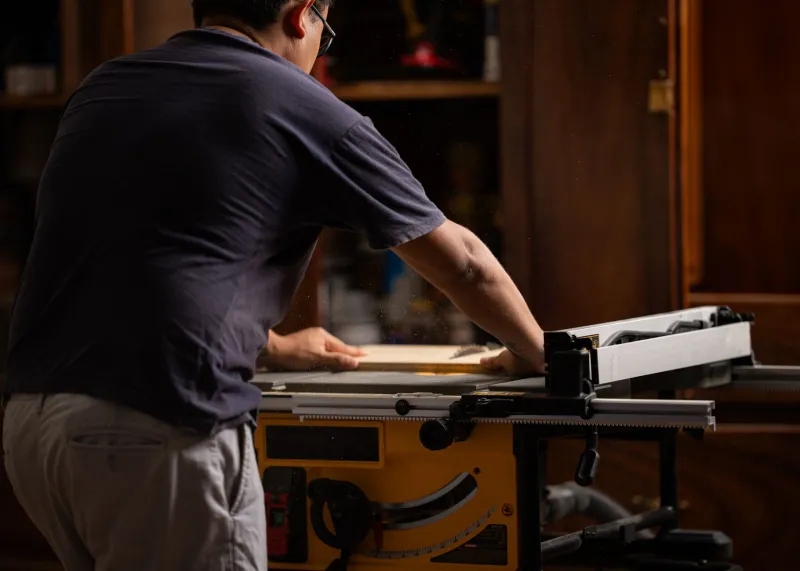
At ten to six on a Thursday in Bristol, the last cut on a table saw winds down. The extractor fan drops a speed, the router goes back in its cupboard, and someone flips the kettle on. By six, the room has shifted from sawdust to sketchbooks. This is the drill curfew in action — not a shutdown, but a change of gear.
Across the UK, shared workshops are getting louder in ambition and quieter in practice. As more making spaces open in converted mills, railway arches, community halls and mixed-use high streets, the question of noise has moved from the margins to the middle of the agenda. In 2026, a workshop’s relationship with its neighbours is as much a part of its equipment list as the bandsaw or the sink.
The curfew that isn’t a shutdown
Most noise rules in shared studios are not blanket bans. They are timetables. Loud tools — planers, routers, hammer drills, air compressors — often stop between 6pm and 8am. Hand tools, sewing machines, electronics benches and 3D printers usually carry on. The point is not to stop making; it is to stop the kind of making that travels through brickwork and into someone’s living room.
One studio manager in Leeds describes it as “a volume dial, not a light switch”. Members know that after six they can still solder, stitch, sand by hand or sketch. What they cannot do is fire up the thicknesser while next door is putting a toddler to bed. The rule is practical, but it also does something subtler: it asks makers to think about the street outside the workshop door.
Treating sound like dust
Many workshops already have extraction systems, spill trays and designated mess zones. Sound is now getting the same treatment. Acoustic screens are appearing around noisy benches. Rubber mats sit under machines. Cupboard doors get seals. Some studios have built “noisy rooms” within larger rooms, so the loud work can be isolated rather than spread across the floor.
In a former mill in Greater Manchester, members lined a tool store with old carpet tiles and offcuts of acoustic foam. It is not a professional soundproofing job, but it takes the edge off. “We are not trying to build a recording studio,” says one member. “We are trying to be a decent neighbour.”
That attitude matters. Acoustic treatment can be expensive, and not every community workshop has the budget for a consultant. But small interventions — moving a bench away from a shared wall, putting a machine on a wheeled trolley with a rubber base, closing a fire door properly — often make a bigger difference than people expect.
The headphone hour
A quieter workshop does not have to be a silent one. Some studios now run a “headphone hour” after 7pm: members can listen to music, podcasts or audiobooks, but speakers stay off. Conversation moves to the kitchen table or the courtyard. The result is a room that still feels alive, but not intrusive.
Other spaces have introduced booking systems that separate loud and quiet work. A member might book the main bench for a morning of routing, then shift to the hand-tool bench in the evening. It is a small logistical change, but it allows the night owls — people with day jobs, parents who make after bedtime, freelancers chasing a deadline — to keep working without turning the street into a sound system.
A contract, not a notice
The best noise rules are not laminated signs taped to a wall. They are agreements that neighbours have had a hand in shaping. In several UK studios, members have set up neighbour liaison groups, annual open evenings and simple escalation routes: if a machine is too loud, there is a number to call, a person to speak to and a promise to review the rule.
A fair noise contract tends to include clear hours, a named contact, a trial period and a regular review. It also accepts that not every complaint is reasonable, and not every maker is selfish. The aim is a workable balance, not a victory for either side.
Who gets to make late?
The curfew debate is also a question of access. Not everyone can make during office hours. Shift workers, carers, students and people in shared flats often rely on evening sessions. A good workshop tries to protect that access without ignoring the people who live next door.
That might mean a quiet room for late-night hand work, a loud room with a strict finishing time, or a rota for the noisiest jobs. It might mean a member volunteering as the studio’s “noise champion” — not a enforcer, more a friendly reminder that the drill curfew is there for a reason.
The 6pm curfew is not the end of late-night ideas. It is a prompt to redesign them. A workshop that can go quiet at six and still stay open at ten is not less ambitious. It is learning to listen — to its members, its neighbours and the street it sits on.