The Light Ledger: How UK Makers Share a South-Facing Window
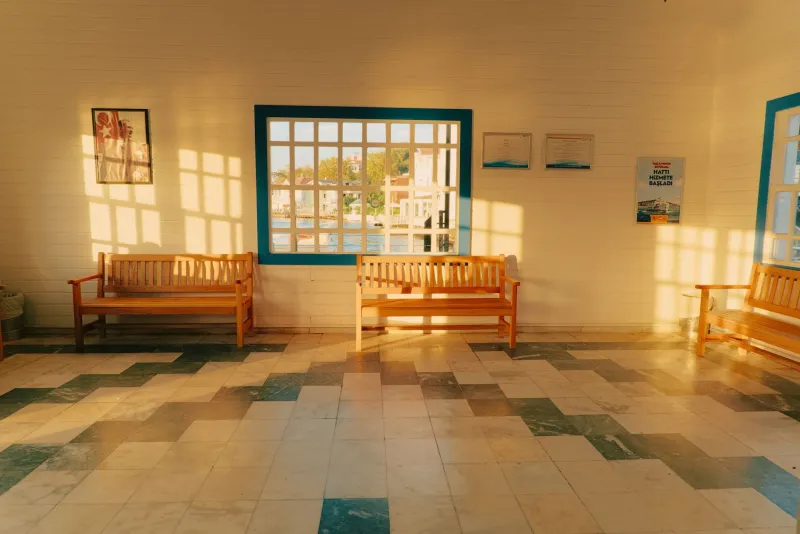
On a damp Tuesday in Bristol, the best seat in the studio is not a seat at all. It is a metre of south-facing windowsill, a folding table and a clip lamp that nobody switches on. By 10:40 it has been booked, logged and handed over. The maker leaving has been printing cyanotypes; the maker arriving needs to check dye samples against the grey outside. Neither owns the window. Both need it.
This is the quiet logic of the daylight rota. Across the UK, shared studios are treating natural light as a material in its own right: finite, seasonal and worth scheduling. Not every workshop has the space for a purpose-built light booth or a bank of daylight-balanced bulbs. What many do have is a window. In winter, that window becomes a rota.
The window as a timesheet
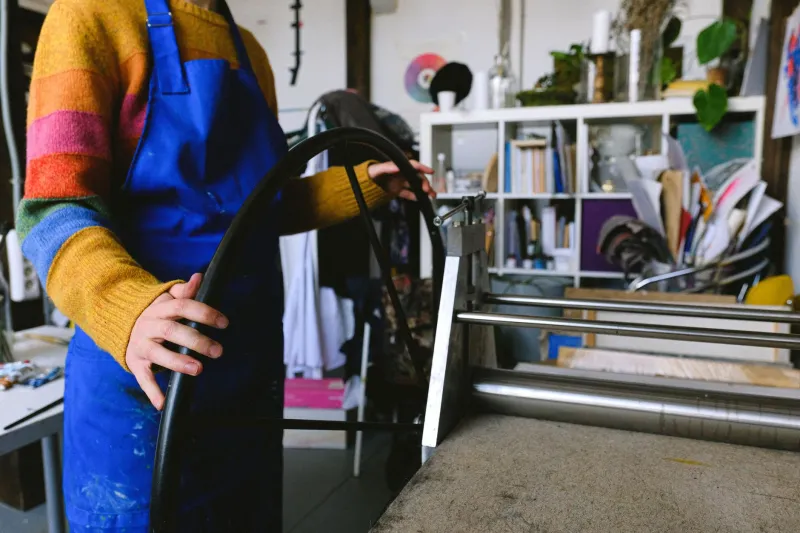
The systems are rarely glamorous. In one member-run print studio in Leeds, the south bench is booked in half-day slots on a whiteboard, with a different colour magnet for each task: direct sun, diffused light, shade only. A photography collective in Glasgow uses a shared online calendar and a simple rule that no one can hold the same morning slot for more than two weeks in a row between November and February. A textile studio in Norwich keeps a laminated sheet by the sill, because, as one member puts it, people will ignore an email but they will not ignore a laminator.
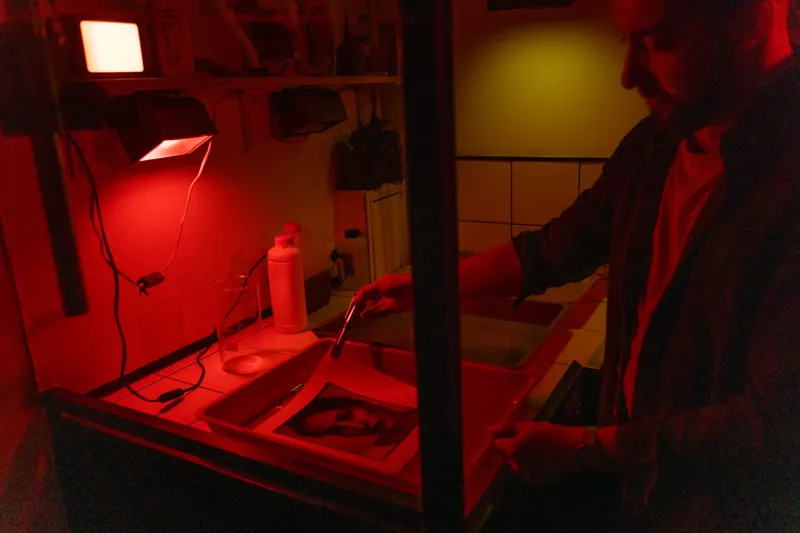
The point is not bureaucracy for its own sake. Daylight-dependent work is often slow work. A printmaker exposing a plate, a photographer making a contact print, a miniature painter judging a fine glaze, a textile artist checking whether two reds actually match: these tasks do not always need hours of sun. They need the right hour. And in a UK winter, the right hour can be a narrow, cloud-dependent window within a window.
Different tasks, different light
A common mistake is to assume everyone wants the brightest spot. They do not. The miniature painter may want raking light to see texture, but not glare across the work. The textile artist may need a neutral view of colour, which can mean diffusing the sun rather than basking in it. The photographer might be chasing ultraviolet for an alternative process, while the printmaker may need consistency more than intensity. One studio in Sheffield solves this by dividing the south bench into three zones: full sun, sheer blind and shaded end. Members book the zone, not the bench.
That granularity matters. Daylight is not one substance. It changes by the hour, by the season and by the direction of the clouds. A rota that treats it as a single tap will frustrate everyone. A rota that recognises different light needs can keep a room of makers on speaking terms.
The winter squeeze
From late October, the south-facing window becomes prime real estate. The sun sits lower, the working day compresses and the number of truly useful daylight hours drops. Studios respond with seasonal compromises. Some cap bookings at two sessions a week per member. Some give priority to people whose income depends on daylight-sensitive work, while keeping a few walk-up slots free for everyone else. Others run a simple swap board: if you cannot use your slot, you offer it back before lunch rather than letting it go dark.
There is also a bit of honest pragmatism. Makers who can shift colour-critical work into June and July sometimes do. Studios that run summer programmes bank more outdoor and window-based tasks for the brighter months, knowing that January will be a scramble. In one ceramic and print space in Cardiff, the winter rota includes a weekly note on sunrise and sunset times, pinned next to the kettle. It is not a romantic gesture. It is a reminder that the studio day is shorter than the clock suggests.
Rules that keep it civil
The best rotas share a few habits. They are visible. They are easy to change. They have a named person, or a small pair of people, who can settle disputes without turning it into a committee inquiry. They ask members to leave blinds, diffusers and props as they found them. They discourage using the window bench as permanent storage, because a sill full of half-finished projects is a daylight tax on everyone else.
There is also the matter of access. Not everyone can work a midday slot. Some members have jobs, caring responsibilities or long commutes. A fair rota does not simply reward whoever is fastest to book. It keeps some slots movable, allows swaps and recognises that the person who can only come in after 3pm still deserves a crack at the light. In practice, that might mean a Saturday morning reserved for members who cannot do weekdays, or a fortnightly review of who has had the south bench and who has not.
When the sun is a nuisance
Come May, the same window that rescued a January proof can become a problem. Glare, heat and fading are real concerns. Printmakers cover drying racks. Textile artists move dye samples out of direct sun. Photographers rig diffusers. Some studios fit UV film or simple roller blinds and ask members to log when they have used them. The rota often flips: in summer, the shaded end becomes the desirable spot. A good daylight policy has to work in both directions.
That is the thing about treating light as a shared material. It is not a fixed benefit. It is a resource with seasons, moods and limits. The studios that manage it well are not the ones with the biggest windows. They are the ones that talk about the window before someone has to complain about it.
For UK makers working in shared rooms, the daylight rota is a small piece of quiet infrastructure. It will never make a headline on its own. But it keeps a printmaker and a painter, a photographer and a textile artist, working in the same room without pretending that the sun belongs to any one of them. In a sector that already runs on borrowed kit, shared benches and favours, that feels like a very practical kind of generosity.