Low Light, Low Volume: The Early Studio Sessions Redesigning the UK's Making Spaces
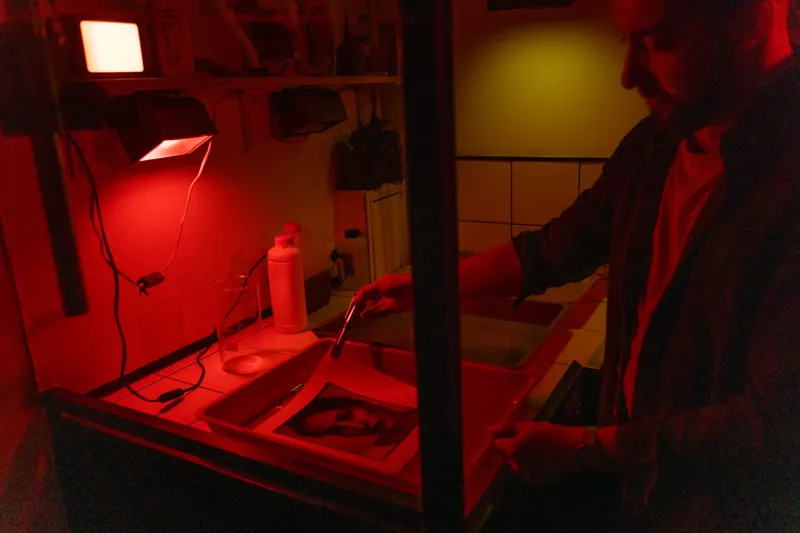
At 7:40 on a Tuesday morning, the print room on Cardigan Lane in Leeds is technically open and practically silent. Two overhead fluorescent tubes stay off. A single anglepoise lamp throws light across a drying rack. Someone is inking a lino block at the far bench, ear defenders round their neck, and nobody has said a word to them in twenty minutes — which, if you ask the people who run the place, is the whole point.
These are the early sessions: slots set aside before normal opening hours, capped at six or eight people, where the lighting comes down, the sound comes down and the noisiest jobs get pushed to the afternoon. They've quietly appeared in UK studios over the past few years — a woodshop in Bristol, a ceramics co-op in Glasgow, a textiles room in Sheffield — and the people booking them are, more often than not, neurodivergent makers who find a busy workshop genuinely hard work.
What the first hour actually looks like
The changes are less dramatic than the phrase "low-sensory" suggests. At Cardigan Lane, the ceiling lights go to about 40% and stay there, with task lamps doing the real work. The door chime is switched off and a hand-written sign goes up saying so. The radio — usually tuned to a local station nobody admits to choosing — stays off entirely. Benches are spaced so there's a clear arm's length between people, and the shared cutting mat gets moved rather than shared.
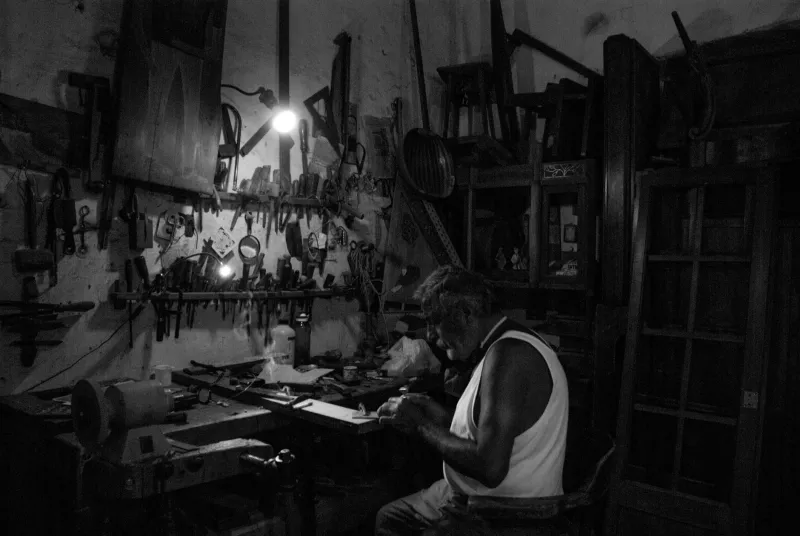
In the Bristol woodshop, the schedule does the heavy lifting. Planer, thicknesser and belt sander are off-limits until 11am. Anything involving a router or a vacuum former moves to the last two hours of the day. Hand tools, marking out, gluing up and finishing — the quiet, slow, fiddly stuff that a lot of makers actually prefer — fills the early slot instead.
The Glasgow ceramics co-op takes a different line: no kiln opening before ten, because the whole room turns to look. "It's a small thing but it's a loud thing," one member tells me. "Everyone stops and watches. I'd rather wedge clay at half seven with three other people than deal with that."
The bill for an hour of hush
Here's the unglamorous part. Early sessions cost money, and usually not very much of it — which is why they keep happening.
The main outlay is staff or volunteer time: someone has to open up, make tea, and be a named person in the room. Most studios I spoke to put that at one to one-and-a-half hours a week, roughly £25–£45 depending on who's doing it and how they're paid. A few pay a host from the normal rota budget and simply run a shorter afternoon.
The kit is cheaper than you'd think. Dimmable LED task lamps run £20–£40 each. Ear defenders on the bench cost about £15 a pair. Felt pads under bench feet are pennies and do more for the noise floor than most people expect. One studio spent £60 on a second kettle so it didn't sit next to the main workbench, which sounds absurd until you've tried to concentrate beside a boiling kettle at close range.
The funding tends to come from three places: a line in the membership fee, a small grant (the £1,000–£5,000 sort that UK makers' groups apply for constantly), or simply absorbing it as part of the venue's normal quiet-hours opening, which many studios were already doing for other reasons.
It's not a favour, it's a spec
What comes across most strongly, talking to members, is a mild irritation at the word "inclusive". Not because they dislike it — because they think it undersells what's happened.
"We didn't add a session for disabled people on top of a normal studio," says Nadia, who helps run the Leeds print room. "We changed how the studio works for the first hour, and it turned out to be the hour everyone wanted. Our retired members book it. Our members with young kids book it. People who just don't like noise book it."
That's the recurring note. Once the overheads are dimmable, once the loud machines have a schedule, once there's a named person to ask for help instead of a general email address, the session stops being a special provision and starts being a better-run workshop. Roughly one in seven people in the UK is neurodivergent, depending on which measure you use — but the practical fixes look a lot like good design for anyone who's ever tried to concentrate.
Who turns up, and who doesn't
The booking forms tell their own story. Studios that ask "is there anything you need from us?" in a free-text box get useful answers: no eye contact at the door, please; written instructions rather than verbal; a photo of the room layout in advance; permission to leave without explaining why.
Attendance is steady rather than dramatic. Most sessions run at 70–90% capacity, with a waiting list for anything involving print or ceramics. The no-shows tend to be people who booked defensively and then felt able to come later in the day — which the organisers count as a win rather than a loss.
Starting one without a budget
If you run a shared space and want to try it, the advice from people already doing it is refreshingly unromantic. Pick one morning a week. Don't add staff — use whoever already opens up. Turn off two lights. Turn off the radio. Write the loud-tool times on a whiteboard so nobody has to ask. Put a name on the door of who's hosting. Don't advertise it as a pilot scheme; just put it in the diary and see who comes.
And keep the kettle where it is, unless it's next to a bench, in which case move it — the Leeds studio is still smug about that one.
The early hour isn't a revolution in how UK workshops run. It's a reordering of the day, so the people who find busy rooms difficult get a crack at the good equipment while it's still quiet. That it also happens to be the nicest hour to work in is, everyone agrees, a bonus nobody planned for.